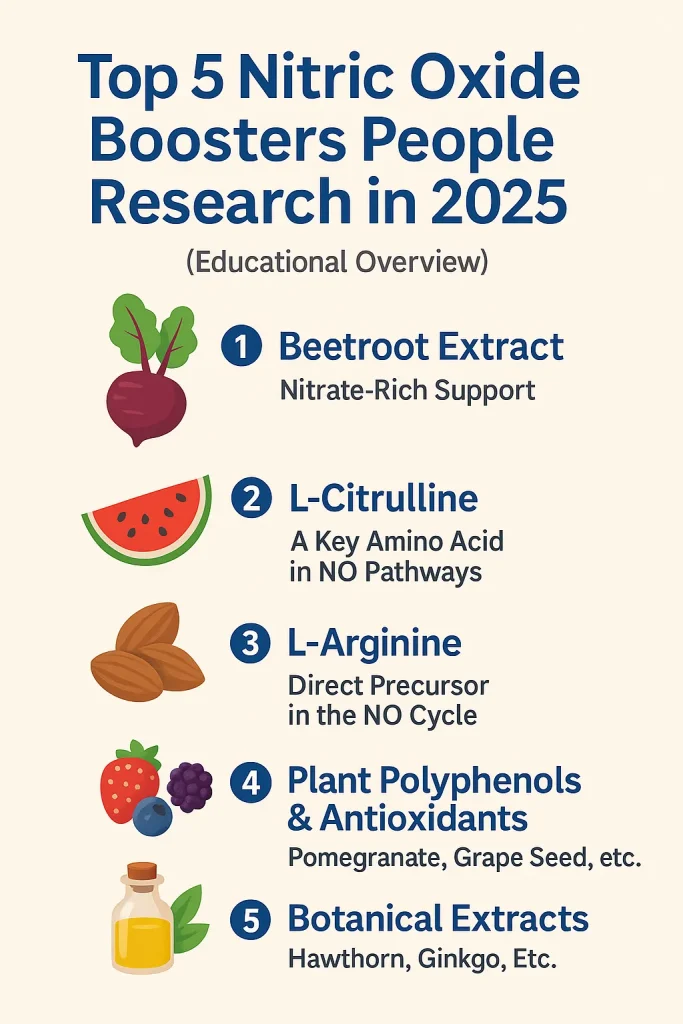
Discover the top nitric oxide boosters people are researching in 2025. Learn how ingredients like beetroot, L-citrulline, plant antioxidants, and botanical extracts support natural nitric oxide pathways. Educational and wellness-focused.
Introduction
In recent years, interest in nitric oxide (NO) has increased dramatically—especially among adults over 40 looking to support healthy circulation, energy, and vitality. While nitric oxide is a naturally occurring molecule, scientific literature shows that its production may gradually decline with age.
This has led many people to research foods, nutrients, and supplements that support nitric oxide pathways.
This guide provides an educational, unbiased overview of the most commonly researched nitric oxide boosters entering 2025.
(Not medical advice. For informational purposes only.)
What Are Nitric Oxide Boosters?
The term refers to nutrients, plants, and compounds frequently studied for their roles in:
- vasodilation
- blood flow
- oxygen delivery
- cellular communication
- exercise performance
These boosters don’t “increase nitric oxide levels” in a medical sense, but many may support the body’s natural nitric oxide pathways, according to scientific interest.
Top 5 Nitric Oxide Boosters People Are Researching in 2025
1. Beetroot Extract (Nitrate-Rich Support)
Why people research nitric oxide boosters it:
Beetroot is one of the most widely discussed ingredients in nitric oxide science because it naturally contains high levels of dietary nitrates.
Educational insights:
- Supports the nitrate → nitrite → nitric oxide pathway
- Well-known in cardiovascular and exercise physiology research
- Frequently used in powders, capsules, or juices
Why adults over 40 explore it:
It is easy to consume, versatile, and commonly included in wellness routines.
2. L-Citrulline (A Key Amino Acid in NO Pathways) nitric oxide boosters
Found naturally in watermelon, L-citrulline is often studied for its role in supporting nitric oxide synthesis through the arginine–NO pathway.
Why it’s popular:
- Gentle on digestion
- Converts into L-arginine inside the body
- Supports enzymatic NO production
Citrulline is widely researched in both sports nutrition and healthy-aging wellness.
3. L-Arginine (Direct Precursor in the NO Cycle)
L-arginine is an amino acid required for the enzyme nitric oxide synthase (eNOS), which helps produce nitric oxide from arginine.
Educational context:
- Naturally found in nuts, seeds, legumes, and fish
- Frequently included in NO-support supplements
- Works in synergy with L-citrulline
Adults exploring circulatory wellness often look at both L-arginine and L-citrulline together.
4. Plant Polyphenols & Antioxidants
Nitric oxide is a short-lived molecule that can break down quickly. Antioxidants help protect it.
Common polyphenol sources that people research include:
- pomegranate
- grape seed extract
- citrus bioflavonoids
- cocoa flavanols
- green tea catechins
- berry extracts
Why they matter:
Antioxidants support vascular communication and help maintain nitric oxide availability.
5. Botanical Extracts Used Traditionally for Circulation
Many modern NO-support blends include herbs historically used for circulation, such as:
- Hawthorn berry
- Ginkgo biloba
- Gotu kola
- Turmeric
- Ginger
These botanicals are not nitric oxide boosters in the strict biochemical sense, but they complement vascular wellness and are frequently researched alongside NO-supporting nutrients.
How People Commonly Combine These Ingredients
Many adults mix foods and nutrients to support nitric oxide naturally, such as:
- leafy greens + beets
- watermelon + citrus
- nuts + berries
- plant polyphenols with nitrate-rich vegetables
Some wellness routines also combine beetroot, L-citrulline, antioxidants, and botanical extracts into a single supplement for convenience.
This “multi-pathway approach” is popular because nitric oxide is influenced by more than one biological mechanism.
Safety & Expectations from nitric oxide boosters (Important)
Nitric oxide boosters:
✔ Support natural physiological pathways
✔ Complement healthy lifestyle habits
✔ Are widely studied in sports and vascular research
✔ Are commonly used by adults over 40
But they are NOT:
✘ medical treatments
✘ cures
✘ replacements for professional care
✘ guarantees of specific outcomes
They should be viewed as nutritional support, not medical solutions.
Who Typically Researches Nitric Oxide Boosters?
Educational patterns show elevated interest among individuals who:
- want to support circulation
- engage in fitness or sports
- are focused on healthy aging
- want consistent daily vitality
- explore nutrition-based approaches to wellness
Interest tends to increase with age, especially after 40.
Conclusion
Nitric oxide has been the subject of extensive scientific research for over three decades. As interest grows, many adults look into natural ways to support the body’s NO pathways through nutrients, foods, and botanical extracts.
The five boosters mentioned in this guide—beetroot, L-citrulline, L-arginine, plant antioxidants, and circulatory botanicals—are among the most commonly explored due to their presence in scientific literature and wellness discussions.
A balanced diet, consistent movement, quality sleep, and mindful lifestyle habits all contribute to natural nitric oxide support.
Read more about: Best Nitric Oxide Foods for Adults Over 40
More articles for you about Nitritc oxide Foods:
Best Nitric Oxide Foods for Adults Over 40
Nitric Oxide After 40: What It Is, Why It Matters, and How People Naturally Support It
One Reply to “Top 5 Nitric Oxide Boosters People Research in 2025 (Educational Overview)”
Comments are closed.